
Protecting Yourself When Digital Privacy Is Impossible

  • Imagine receiving a call from your bank’s fraud department. The caller already knows your name, address, and date of birth. “Did you make a £1,200 purchase at an electronics store?” he asks. You know you didn’t, so when he says he needs your credit card number and online banking password to reverse the charge, you feel alarmed and comply. A few hours later, your bank account is nearly empty. What just happened? The caller was a scammer armed with personal details from a past data breach.

In our connected world, our digital privacy is under constant threat. Every time we shop online, use social media, tap a travel card, or even drive through a toll, companies and institutions collect and share our information. Much of our life is also public record – voter registrations, property records, etc. The result is a massive amount of personal data stored in databases worldwide, beyond our control. Achieving true privacy is nearly impossible today, and criminals know it. But this doesn’t mean we’re helpless. Here’s how you can protect yourself in a world where complete privacy is a myth.

Our Data Is Everywhere

Our lives leave digital footprints everywhere we go. Online services track our purchases and preferences. Mobile apps log our location and habits. Even a walk through a car park might put you on a security camera. Regardless of who’s collecting the data or why, the outcome is the same – huge troves of personal information exist outside your control. And once that data exists, it can be stolen, sold, or misused by others.
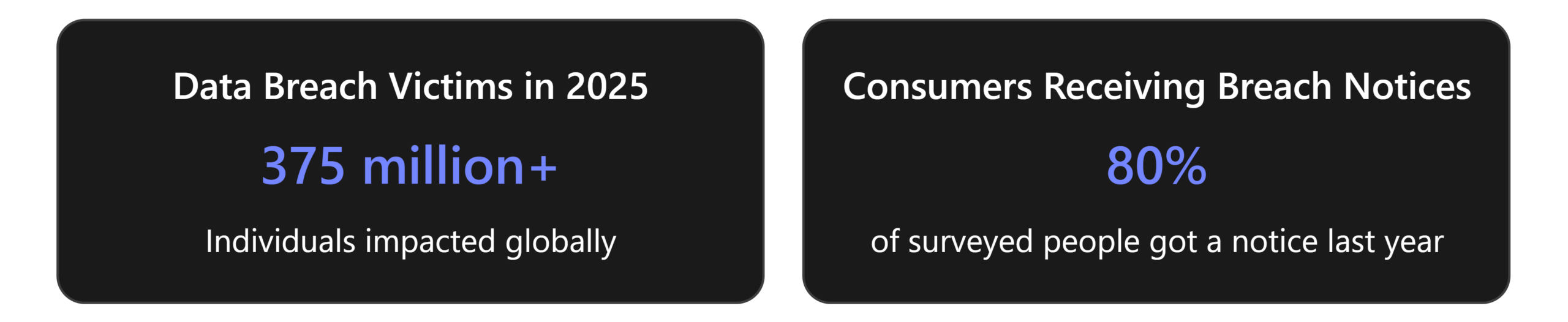
For example, data breaches have become alarmingly common and widespread. In 2025 alone, 4,080 data breaches exposed personal details of at least 375 million individuals. In fact, a recent survey found 80% of people received a breach notification in the last 12 months – meaning eight in ten of us have had some personal info compromised.
  • That’s the reality: most likely, some of your data is already out there.
What does this mean for you? It means information about you – your contact details, login credentials, even purchase history – might already be in the hands of strangers. There are cases where criminals used stolen passwords from one breach to break into other accounts. True privacy is a rare commodity, but understanding this can be empowering: if you know your data could be out there, you can take steps to guard against its misuse.

Familiar Details, False Trust

Having so much personal data floating around makes it easy for scammers to impersonate trusted people or companies. Just because someone contacting you knows your details doesn’t mean they are legitimate. It only makes their scam more convincing.
Consider a few common ploys attackers use with leaked information:
  • “Your Bank” calls with your info: A scammer calls claiming to be from your bank and casually recites your home address or recent transactions to build trust. Then they ask for your passwords or one-time codes – something a real bank would never do over the phone.
  • Phishing emails with personal touches: You might get an email that includes your full name, maybe even your phone number or birthday, so it looks official. It may urge you to click a link to verify account details – a classic phishing trap.
  • Texts about your car or taxes: Fraudulent text messages could reference the exact make and model of your car or mention “issues” with your tax filing, including details only an official source would know. This is meant to disarm your suspicions.
Don’t be fooled. Criminals can gather these personal tidbits from data breaches, social media, or public records. Familiar details do not equal trust. Always verify unsolicited communications, no matter how convincing. If in doubt, hang up or ignore the message – then contact the institution directly using a verified number or website. Legitimate banks and companies will understand your caution. Also, watch for red flags like a sense of urgency, too-good-to-be-true offers, lots of grammatical errors, or odd sender addresses – these often signal a scam.
The key takeaway: Never share sensitive information or click suspicious links just because the person contacting you knows some facts about you.
  • Knowledge can be forged; trust must be earned through verification.

Monitor Financial Accounts

Since you can’t possibly lock down all your personal data, your next best defence is early detection. If a fraudster does use your information, catching it quickly can prevent a financial disaster. The faster you spot unauthorised activity, the easier it is to stop it and limit the damage. Here are some simple steps anyone can take to stay a step ahead:
  • Set up financial alerts: Turn on notifications for your bank accounts, credit cards, and investments. Most institutions let you receive an instant text or email for every transaction or login attempt. This way, if someone tries using your card or account, you’ll know within seconds and can take action.
  • Monitor your accounts regularly: Don’t just rely on alerts. Make it a habit to review your bank statements and online accounts once a week (or have weekly account summaries emailed to you). Scammers sometimes start with a small test charge; if you catch it early, you can shut them down before bigger charges occur.
  • Freeze or watch your credit: In many countries, you can freeze your credit reports for free, which stops anyone from opening new credit lines in your name. At minimum, check your credit reports a few times a year for unfamiliar accounts or inquiries. This helps guard against identity thieves taking out loans or credit cards without you knowing.
These proactive measures create an early-warning system. You don’t need to be a cyber security expert to do this – anyone can set up alerts or scan through transactions. It’s a small time investment that can save you from huge headaches down the road.

Stay Alert, Stay Safe

We live in a world where perfect privacy is, unfortunately, unattainable. But that doesn’t mean we’re powerless. By staying alert and taking a few smart precautions, you can protect yourself even when your data is out in the open. Remember, just because someone knows your information doesn’t mean they are trustworthy. Question the unexpected. Be vigilant with your finances.
Most importantly, don’t panic – prepare. You can’t control every database or breach, but you can control how you respond. Stay curious, ask questions, and trust your instincts. If something feels off, it probably is. And if you ever need guidance on safeguarding your personal data or dealing with a security scare, reach out for expert help.

Final Thoughts: Take control of your digital safety

Start by implementing the steps above. If you want more personalized advice or assistance with protecting your data, get in touch with our team today – we’re here to help you navigate this less-than-private digital world and keep your information secure.

Effective training, strong fundamentals, intelligent governance and excellent risk assessment are now essential. If you want to reduce phishing risk, Cyber & Data can help.

Cyber & Data Protection are able to assess your organisation for Cyber Essentials. Get in touch with us now for more information.

Contact Cyber & Data Protection to discover how our tailored training, cyber security and data protection packages and extensive Cyber Essentials and virtual CISO services can keep your business ahead of the game to help navigate the likely cyber threats in 2026 and maintain compliance.

📧 Email: [email protected]
📞 Call: +44 1743 644404

Privacy Preference Center